
Forschung

Research

Rekonfigurierbare Tragwerke, Entwerfen aus dem Bestand und robotische Montage – Forschung an der Schnittstelle von Entwurf, Berechnung und Fertigung.

Wir untersuchen, wie Bauteile mehrfach verwendet werden können: Tragwerke, die sich aus einem begrenzten Satz von Elementen immer wieder neu zusammensetzen lassen, Entwurfswerkzeuge, die vom vorhandenen Material ausgehen, und robotische Abläufe, die solche Umbauten überwacht ausführen.

Publikationen
Abbildung aus „From Scan to Reconfiguration: Robotic Framework for Supervised Transformation of Modular Assemblies“
2026

From Scan to Reconfiguration: Robotic Framework for Supervised Transformation of Modular Assemblies

Lennart Hamm, Sebastian Baumfried, Michael Sinzinger, Oliver Englhardt

Proceedings of the 44th eCAADe Conference, Vol. 2 · doi:10.52842/conf.ecaade.2026.2.517

Abstract

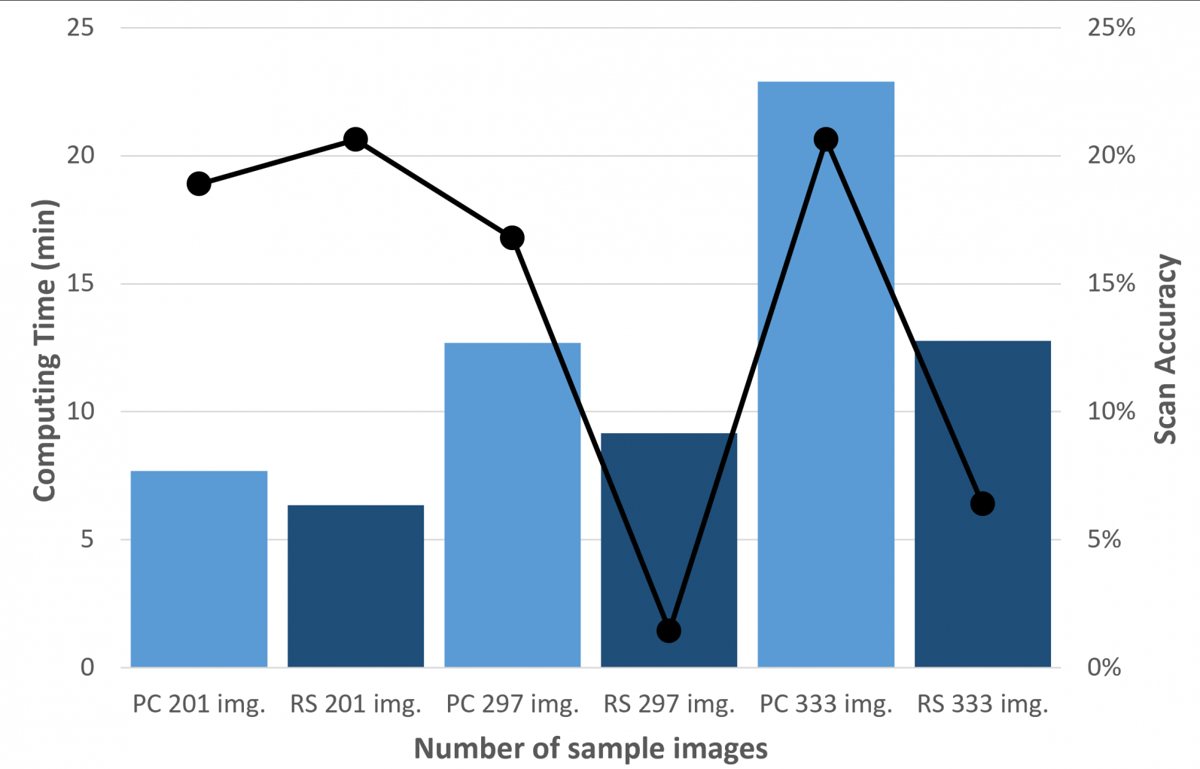
This paper examines the feasibility of a unified, human-in-the-loop, automated pipeline for the robotic disassembly and reconfiguration of modular assemblies. It argues that the performance of scan-to-robot operation workflow depends on two elements: the accuracy of the scan derived digital model that initiates the process and a small number of deliberate human checkpoints that prevent errors from spreading. Through iterative experiments on a dry brick assembly, the study develops a gate-based workflow that chains scanning, digital-shadow creation, sequencing, reconfiguration and execution into one pipeline. Each stage consumes the previous stage's validated output. The study is a controlled proof-of-concept demonstrating that, when digital models meet required quality standards, the subsequent planning process becomes more reliable and physical execution stabilises. Conversely, when these standards are not met, occurring malfunctions at the end of the pipeline can be counterbalanced by human gate-checks. The research also finds that equilibrium-aware sequencing is necessary for reliable operation, while stochastic design generation is most effective when paired with lightweight prefilters and mandatory static validation. The contribution is a replicable decision framework that links measurable signals at key stages to go/redo/rollback actions. This enables minimal yet effective human oversight and offers practical guidance for adaptive reconfiguration of existing building stock, lowering the expertise barrier to component reuse in architectural construction.
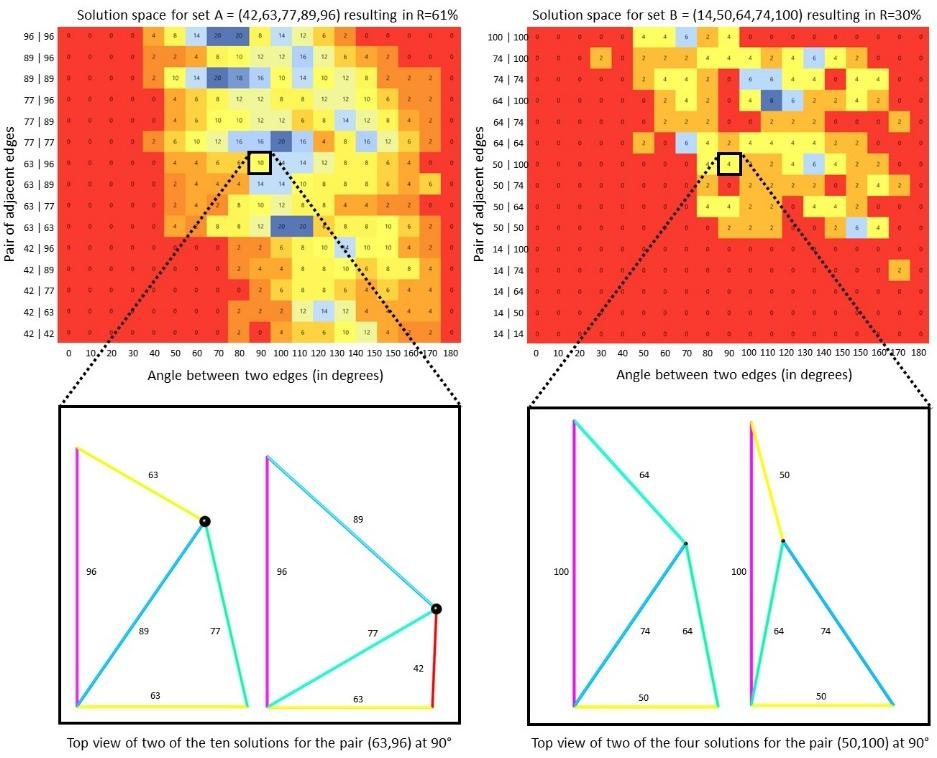
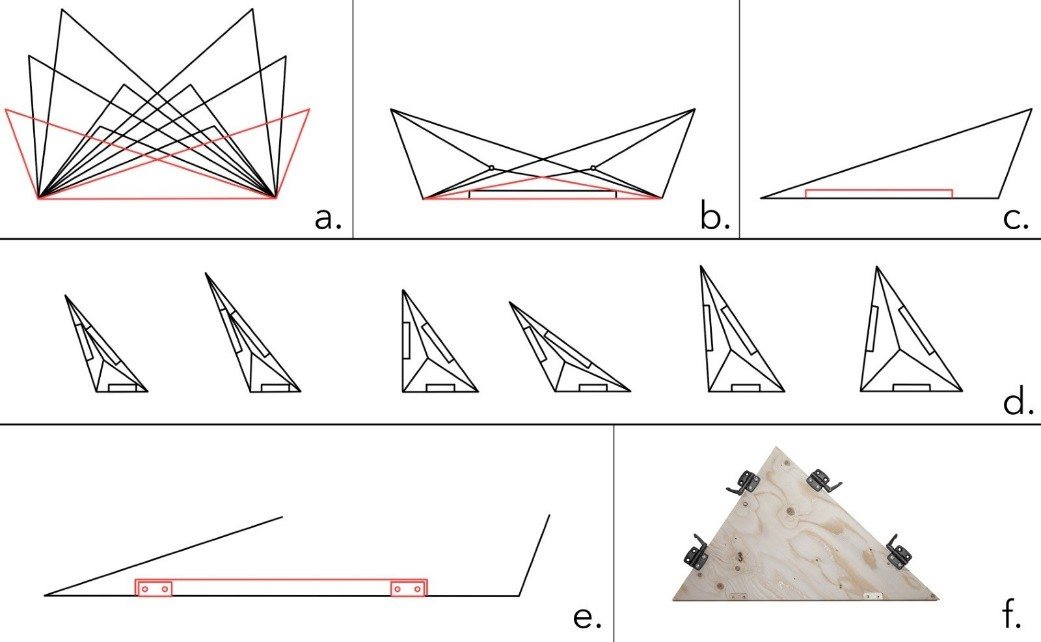
Abbildung aus „Reconfigurable Shell Structures: Optimizing Panel Sets“
2026im Erscheinen

Reconfigurable Shell Structures: Optimizing Panel Sets

Lennart Hamm, Nicolas Rogeau, Arastoo Khajehee, Yasushi Ikeda, Oliver Englhardt

Design Modelling Symposium 2026 (DMS26), EPFL Lausanne & Fribourg

Abstract

This research investigates reconfigurable shell structures built from a limited set of triangular panels that can be disassembled, reused, and rearranged into multiple forms. Unlike conventional stock-based design, which targets a fixed shape, this study proposes an iterative, user-driven design–build process where structures adapt in real time. Focusing on folded plate systems, discrete planar elements connected along folds relax geometric constraints, enabling greater combinatorial flexibility compared to continuously curved shells. The methodology introduces a computational workflow for generating and identifying sets of triangles that maximize reconfigurability. To explore the underlying combinatorial problem that defines the reconfigurability score, three datasets of combinations of edge lengths were sampled. Furthermore, a surrogate model was trained to predict reconfigurability and understand the design space. Results showcase that highly reconfigurable panel sets follow specific patterns. After training, the surrogate model enabled fast screening of large design spaces within user-defined dimensional bounds and helped to identify promising panel sets with high reconfigurability.

Abbildung aus „AR-Driven Reconfiguration of a Triangular Wood Shell: Designing from a limited stock of elements“
2025

AR-Driven Reconfiguration of a Triangular Wood Shell: Designing from a limited stock of elements

Lennart Hamm, Nicolas Rogeau, Arastoo Khajehee, Iris Mach, Oliver Englhardt, Kaori Fujita, Yasushi Ikeda

Architectural Informatics – Proceedings of the 30th CAADRIA Conference, Vol. 2, S. 377–386 · doi:10.52842/conf.caadria.2025.2.377

Abstract

This research introduces an Augmented Reality (AR)assisted design-to-construction framework for creating reconfigurable wooden shells from a predefined set of triangular panels. Addressing the need for adaptable and sustainable building systems, the framework facilitates the disassembly and reuse of structural components, reducing waste and enabling flexible responses to changing requirements. The AR interface enhances the design and assembly processes, allowing users to visualize and manipulate configurations in real time. By providing intuitive guidance, it empowers both expert and non-expert participants to engage actively with the iterative design process. The system’s modular joining mechanism supports rapid adjustments during assembly, ensuring accurate panel placement and preserving the integrity of components for future reuse. Experiments demonstrated the framework's ability to create dynamic structures capable of evolving over time while also improving assembly efficiency and collaboration. By combining modular construction principles with AR technology, this approach promotes adaptability, reusability, and material efficiency. The research underscores the potential of blending physical and digital workflows to address sustainability challenges in the architecture, engineering, and construction (AEC) sector, advancing the development of structures that can respond to changing needs while minimizing environmental impact.

Abbildung aus „Timber Trace – AI Workflow Mapping Forest Change for Architecture“
2025

Timber Trace – AI Workflow Mapping Forest Change for Architecture

Giorgia Wolman, Lennart Hamm (Betreuung: Gabriella Rossi)

Masterarbeit, Master in Advanced Computation for Architecture & Design (MaCAD), IAAC Barcelona

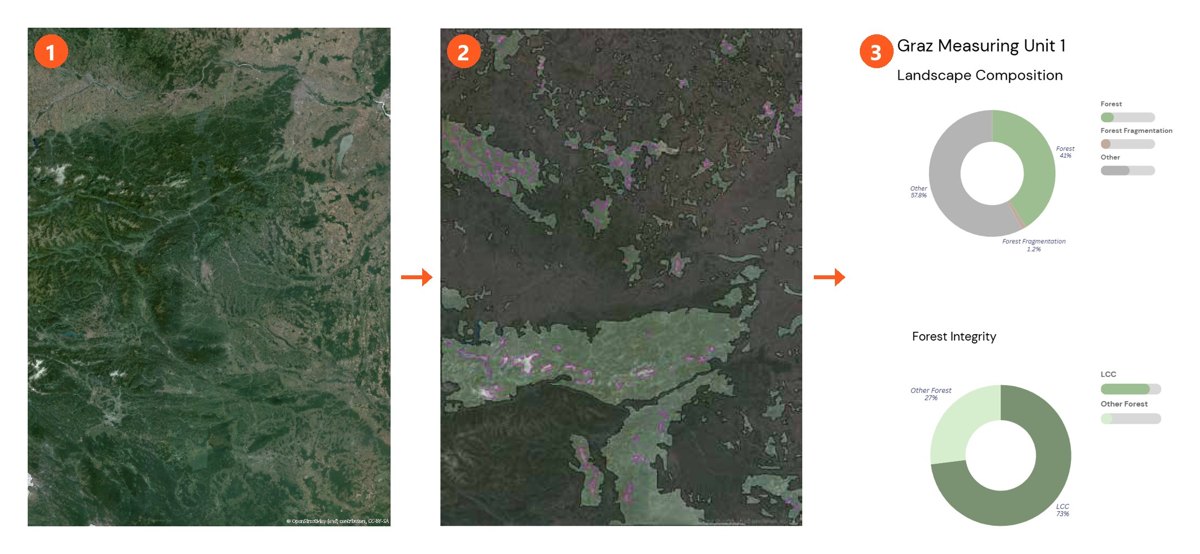
Was verrät die Überwachung von Holzeinschlag über die verborgenen Folgen von Holz in der Architektur? Satellitenbilder und ein Segmentierungsmodell machen Waldveränderungen messbar und bringen sie als Entscheidungshilfe in frühe Entwurfsphasen.

Abstract

This thesis responds with a reproducible workflow that converts imagery into spatially explicit ecological indicators. The pipeline combines assisted labeling of data samples with a segmentation model and tiled inference to produce georeferenced maps of forest change, which are then integrated into early-stage architectural workflows as decision support for sustainable material choices.

Abbildung aus „Deconstructing Wood – Traditional Japanese Carpentry and Digital Timber“
2024

Deconstructing Wood – Traditional Japanese Carpentry and Digital Timber

Lennart Hamm (Betreuung: Iris Mach)

Diplomarbeit, TU Wien · doi:10.34726/hss.2024.112541

Abstract

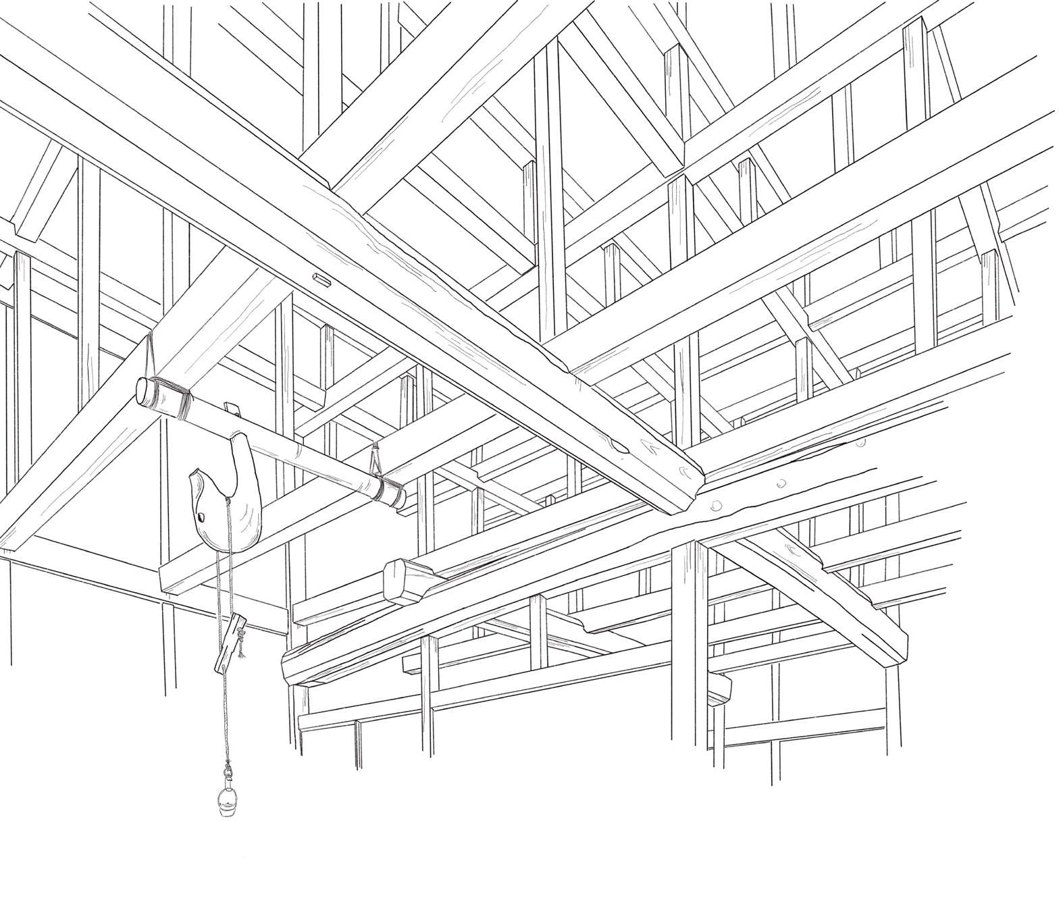
In the past two centuries, timber architecture has evolved into a fragmented profession, where all stakeholders act independently of one another. The homogenization of wood has led to the assumption of a perfect and continuous material. The standardization of industrial wood, however, has led to the development of non-adaptive fabrication processes and assemblies. In contrast, traditional Japanese carpentry embraces the diversity of natural wood. Since carpenters were previously engaged in all aspects of the woodworking process, from harvesting to design, fabrication, assembly and maintenance, they were able to adopt a holistic perspective on working with wood. The structural systems of traditional Japanese wooden buildings, both local (i.e. joinery) and global, (i.e. post-beam grids) demonstrate a high level of modularity. Structures are fully dismantlable, and fabrication processes are designed to respond to the material’s behavior rather than imposing their own. Similarities can be found in research on digital timber design, which employs concepts such as design for disassembly. The examination of traditional Japanese carpentry, which is highly advanced in terms of timber construction, facilitates the contextualization of research on digital timber. It is about understanding machinery as tools, which are determined by humans rather than designs being dictated by the constraints of digital design and digital fabrication.

Anfrage

Lass uns reden.

Beschreib kurz, worum es geht. Wir melden uns innerhalb weniger Tage.